
By Fiona Metcalfe, Lead nurse for neonatal surgery at Leeds Teaching Hospitals NHS Trust and former Chair, National Neonatal Surgical Special Interest Group
In September, I had the privilege of chairing a multidisciplinary workshop at the BAPM Conference in Nottingham. I was there both as a representative of the Neonatal Surgical Special Interest Group (NNSiG), part of the NNA, and in my capacity as Lead Nurse for Neonatal Surgery at Leeds Teaching Hospitals NHS Trust.
The workshop focused on the transition of babies from neonatal units to paediatric wards or local district general hospitals. Using a complex surgical neonatal case study, we explored the challenges and opportunities involved, alongside parental feedback and examples of best practice.
The experience was both professionally rewarding and personally inspiring.
Although I was asked to chair the workshop, it was very much a collaborative effort. Our planning group included nurses, pharmacists and dietitians from across the UK, all bringing different perspectives and expertise. We met regularly via Microsoft Teams, shared resources through the Future NHS platform and communicated frequently by email.
Like many multidisciplinary projects, we all started with different ideas, but by focusing on shared priorities we developed a workshop that reflected the strengths of every profession involved.
One of the most valuable aspects of the planning process was engaging with Bliss and parent advisory groups.
Listening to families’ experiences helped ensure that the parent voice remained central to the workshop. It reminded us that transfer is not simply a logistical process. For families, it can be an emotional transition involving uncertainty, changing expectations and loss of familiar support networks.
These insights shaped many of our discussions and reinforced the importance of family-centred care.
The workshop also provided an opportunity to promote the BAPM Transfer to Paediatrics Framework, which recognises transition as a planned process requiring collaboration between neonatal, paediatric and specialist teams, with families as partners in care.
Delegates discussed barriers to successful transfers, shared examples of local innovation and considered how earlier multidisciplinary involvement could improve experiences for babies, families and staff.
Personally, I learned a great deal from colleagues who had previous experience of organising national workshops. Their support meant I never felt the responsibility rested solely with me. Instead, I experienced what effective multidisciplinary working looks like in practice: shared leadership, mutual respect and a collective commitment to improving care. The workshop reinforced that some of the best ideas emerge when different professions come together with a common purpose.
I am grateful to BAPM for supporting our group with travel funding and conference access, enabling us to participate fully in the wider conference programme. Most importantly, the experience highlighted the significant contribution nurses and allied health professionals make throughout the patient pathway. We are often the professionals’ connecting services, supporting families and driving improvements in patient experience.
For any nurse considering involvement in specialist interest groups, national projects or conferences, I would strongly encourage it. Opportunities like this allow you to develop new skills, build professional networks and contribute to improving care on a wider scale.
I left the conference with new knowledge, new connections and a renewed appreciation of the value nurses and allied health professionals bring to multidisciplinary care. Most importantly, I left proud to have been part of a team working to improve transitions for babies and families across the UK.
NNA members: we’d love to hear from you!
Whether you’ve overcome a challenge, learned something new or had an incredible interaction with a baby or family, why not submit a blog article? Our team will review it and get in touch before publication.


 I’m Lora Alexander, one of the Quality Improvement coaches in a busy Level 3 NICU. QI is all about understanding problems, thinking of solutions, implementing ideas and analysing the results.
 My name is Adedoyin Yissau, also known as Dee. I am the Education and Workforce Lead for the London Operational Delivery Network. I came into post as a Network Educator in 2019 and have since developed nursing education region wide, with the current focus on developing a nursing career pathway for London.

 Neonatal Network Nurse Educator
 My name is Dr. Julia Petty, and I am a nurse lecturer specialising in children’s nursing with a particular interest in neonatal care. My nursing career in paediatric and neonatal clinical nursing practice began after a BSc Hons degree in Psychology at Warwick University, when I moved to Great Ormond Street Hospital, London. Here, I trained in children’s and adult nursing before working there for many years in children’s and neonatal surgical care. I then gained my neonatal nursing qualification at St George’s NHS Trust London and worked at the Whittington NHS Trust NICU before moving back to Great Ormond Street for a senior education role on NICU where I worked until 2001. I then worked as Senior Lecturer at City University, London for 12 years leading the neonatal nursing education portfolio. I studied for a MSc, a PGCE and MA in academic practice during this time, In 2013, I moved to the University of Hertfordshire where my role is Associate Professor (learning and teaching) and Senior lecturer child nursing. I teach on the BSc Hons nursing and master’s degree programmes including leadership of modules, face-to-face/online teaching, assessing and supervision of students at all levels up to doctorate level. I am also research active and have completed a Doctorate in Education. As a nurse, educator and post-doctorate researcher, my interests focus on parents’ premature birth experiences, supporting parents in the transition home from NICU, exploring communication needs of neonates and their carers and studying the educational value of digital storytelling. This combination and variety of roles enriches my working life and brings together my experience as a child / neonatal nurse, educator and researcher. My role and related activities enable me to engage in both education and research while supporting students on their nursing career and education pathway, which is a privilege to be part of.
 Hello my name is Claire Richards and I’m the Lead Nurse for the Wales Maternity and Neonatal Strategic Network. This covers nursing leadership but also Neonatal transport. I also have a clinical honorary contract in one Health Board.
 Hello, my name is Kim Edwards, and I am a Neonatal Nurse. I am currently the Lead Nurse and Workforce, Education Lead for the Thames Valley and Wessex Neonatal Operational Delivery Network (ODN)
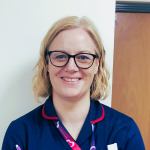
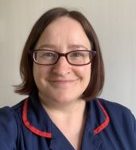 Hello, my name is Jean and I am a registered children’s nurse with 27 years experience. I qualified with a DipHE after struggling academically due to dyslexia. Over my career I have worked mainly in PICU, NICU and children’s cardiac critical care. I am dual qualified in speciality (QIS) for both Neonatal and Paediatrics. The QIS program is a post graduate modular course completed at level 6/7. To be considered QIS you must successfully complete 4 separate modules, each have an academic and practical component. Only on completion of the QIS course can you apply for a band 6 role. In addition to the above qualifications it is expected you would have several years proven experience in speciality at Band 6 and 7 prior to applying for a Matron’s role.
 My name is Lisa Baker, I’m a Ward Manager on a Level 2 Special Care Baby Unit in South Wales and I’ve been in this role since 2020.
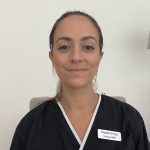 Hello, my name is Wesell, and I am currently a trainee Advanced Neonatal Nurse Practitioner (ANNP) at Great Western Hospital, which is a Local Neonatal Unit (LNU). Prior to this, I gained substantial experience in a tertiary neonatal unit where I completed my QIS course at master’s level. This course, alongside my role as a senior nurse, provided me with the expertise required to develop my career further in neonatal care.
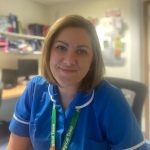 My name is Hannah Wells, and I am a Neonatal Surgical Clinical Nurse Specialist (CNS).
 Hi, I am Amanda and work as the Neonatal Infant Feeding Coordinator for a NICU and a SCBU within one service. While the role is not standardised, many neonatal units now have dedicated posts.
 Hello, my name is Daniela Machado, and I am proud to be a Developmental Care Specialist/Lead Nurse and a sister/charge nurse, working across two different trusts. I am originally from Porto, Portugal, and have spent 14 years building my nursing career in the UK. My role involves applying and advancing neuroprotective/developmental care practices for our preterm and neonatal patients/families.
 Hello! I am Renjita Raju , a Neonatal Junior Sister working in London. After completing my BSc nursing degree in India, I moved to UK, and completed NMC OSCE to get registered and QIS course to become specialised in neonatal care. I recently qualified as an NLS instructor with the support from NNA scholarship programme. My role involves caring for premature and critically ill newborns, ensuring their safety and health with a highly collaborative multidisciplinary team. I also teach in NLS courses as an instructor following my passion in neonatal resuscitation. I love witnessing infants grow stronger each day and supporting their families through this journey. I’m grateful for the opportunity to provide meaningful compassionate care to the tiniest, most vulnerable patients.
