
By Lynsey Edwards an Advanced Neonatal Nurse Practitioner working in Wales
Following maternity leave, I returned to the neonatal workforce with a strong interest in sustainability and reducing our environmental impact. This stemmed from changes I had made in my own life after becoming a parent, which prompted me to think more critically about my personal carbon footprint and how similar principles could be applied within healthcare.
On returning to the neonatal unit, I began exploring practical ways to reduce energy consumption and waste. Working collaboratively with colleagues in Adult Intensive Care and the Emergency Department, I reviewed initiatives that had already been implemented elsewhere. Adult Intensive Care, in particular, benefits from the Green ICU framework, which provides structured guidance on reducing the carbon footprint of clinical practice. Drawing on some of these ideas, we identified several simple but effective changes that could be implemented within our neonatal service.
One of our first projects focused on computer usage outside of normal working hours. An audit revealed that approximately two-thirds of computers across the unit remained switched on overnight, many in empty bed spaces or offices where they were not being used. We introduced a simple initiative to switch off unused computers at the end of the day. Subsequent audits have demonstrated excellent compliance, and this straightforward change has resulted in a significant reduction in electricity consumption. It has also highlighted how small actions, when adopted consistently, can make a meaningful difference.
We also reviewed our recycling processes. With support from the UHB, dedicated recycling bins were introduced, and we expanded our recycling efforts to include items such as printer ink cartridges, which are collected by external recycling companies. In addition, we addressed the disposal of formula milk bottles. Historically, these were often discarded into clinical waste; however, by introducing a simple process of rinsing bottles before placing them in recycling bins, we have substantially reduced the volume of clinical waste generated by the unit.
Reducing unnecessary plastic use has been another area of focus. Our unit had already adopted a “gloves-off” approach in situations where personal protective equipment is not clinically indicated. However, over time, the routine use of gloves and aprons had become embedded in some aspects of care where they were not required. We have worked to reinforce evidence-based practice, recognising that activities such as cuddling a baby or bottle feeding do not require gloves or aprons unless there is a risk of exposure to bodily fluids. This has helped reduce unnecessary plastic consumption without compromising patient or staff safety.
Alongside these larger initiatives, we have encouraged small changes in day-to-day clinical practice. For example, when preparing for cannulation, staff are encouraged to open only the equipment that is immediately required rather than opening multiple cannulas in anticipation of potential need. If additional equipment is required, it can be opened at that point. Such simple adjustments reduce waste and prevent unnecessary disposal of unused plastic products.
We are not undertaking large-scale national quality improvement projects or claiming dramatic reductions in carbon emissions. Instead, we are focusing on practical, achievable changes that can be embedded into everyday care without affecting patient safety. The cumulative impact of these small actions can be substantial, and if adopted widely across neonatal services, they have the potential to contribute to significant national carbon savings.
It would be inspiring to hear about the small changes other units have implemented to support greener, more sustainable neonatal care.



 I’m Lora Alexander, one of the Quality Improvement coaches in a busy Level 3 NICU. QI is all about understanding problems, thinking of solutions, implementing ideas and analysing the results.
  My name is Adedoyin Yissau, also known as Dee. I am the Education and Workforce Lead for the London Operational Delivery Network. I came into post as a Network Educator in 2019 and have since developed nursing education region wide, with the current focus on developing a nursing career pathway for London.
 Neonatal Network Nurse Educator
 My name is Dr. Julia Petty, and I am a nurse lecturer specialising in children’s nursing with a particular interest in neonatal care. My nursing career in paediatric and neonatal clinical nursing practice began after a BSc Hons degree in Psychology at Warwick University, when I moved to Great Ormond Street Hospital, London. Here, I trained in children’s and adult nursing before working there for many years in children’s and neonatal surgical care. I then gained my neonatal nursing qualification at St George’s NHS Trust London and worked at the Whittington NHS Trust NICU before moving back to Great Ormond Street for a senior education role on NICU where I worked until 2001. I then worked as Senior Lecturer at City University, London for 12 years leading the neonatal nursing education portfolio. I studied for a MSc, a PGCE and MA in academic practice during this time, In 2013, I moved to the University of Hertfordshire where my role is Associate Professor (learning and teaching) and Senior lecturer child nursing. I teach on the BSc Hons nursing and master’s degree programmes including leadership of modules, face-to-face/online teaching, assessing and supervision of students at all levels up to doctorate level. I am also research active and have completed a Doctorate in Education. As a nurse, educator and post-doctorate researcher, my interests focus on parents’ premature birth experiences, supporting parents in the transition home from NICU, exploring communication needs of neonates and their carers and studying the educational value of digital storytelling. This combination and variety of roles enriches my working life and brings together my experience as a child / neonatal nurse, educator and researcher. My role and related activities enable me to engage in both education and research while supporting students on their nursing career and education pathway, which is a privilege to be part of.
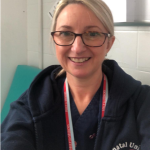 Hello my name is Claire Richards and I’m the Lead Nurse for the Wales Maternity and Neonatal Strategic Network. This covers nursing leadership but also Neonatal transport. I also have a clinical honorary contract in one Health Board.
 Hello, my name is Kim Edwards, and I am a Neonatal Nurse. I am currently the Lead Nurse and Workforce, Education Lead for the Thames Valley and Wessex Neonatal Operational Delivery Network (ODN)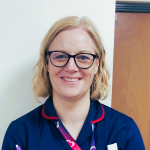
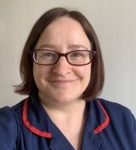 Hello, my name is Jean and I am a registered children’s nurse with 27 years experience. I qualified with a DipHE after struggling academically due to dyslexia. Over my career I have worked mainly in PICU, NICU and children’s cardiac critical care. I am dual qualified in speciality (QIS) for both Neonatal and Paediatrics. The QIS program is a post graduate modular course completed at level 6/7. To be considered QIS you must successfully complete 4 separate modules, each have an academic and practical component. Only on completion of the QIS course can you apply for a band 6 role. In addition to the above qualifications it is expected you would have several years proven experience in speciality at Band 6 and 7 prior to applying for a Matron’s role.
 My name is Lisa Baker, I’m a Ward Manager on a Level 2 Special Care Baby Unit in South Wales and I’ve been in this role since 2020.
 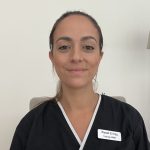 Hello, my name is Wesell, and I am currently a trainee Advanced Neonatal Nurse Practitioner (ANNP) at Great Western Hospital, which is a Local Neonatal Unit (LNU). Prior to this, I gained substantial experience in a tertiary neonatal unit where I completed my QIS course at master’s level. This course, alongside my role as a senior nurse, provided me with the expertise required to develop my career further in neonatal care.
 My name is Hannah Wells, and I am a Neonatal Surgical Clinical Nurse Specialist (CNS).
 Hi, I am Amanda and work as the Neonatal Infant Feeding Coordinator for a NICU and a SCBU within one service. While the role is not standardised, many neonatal units now have dedicated posts.
 Hello, my name is Daniela Machado, and I am proud to be a Developmental Care Specialist/Lead Nurse and a sister/charge nurse, working across two different trusts. I am originally from Porto, Portugal, and have spent 14 years building my nursing career in the UK. My role involves applying and advancing neuroprotective/developmental care practices for our preterm and neonatal patients/families.
 Hello! I am Renjita Raju , a Neonatal Junior Sister working in London. After completing my BSc nursing degree in India, I moved to UK, and completed NMC OSCE to get registered and QIS course to become specialised in neonatal care. I recently qualified as an NLS instructor with the support from NNA scholarship programme. My role involves caring for premature and critically ill newborns, ensuring their safety and health with a highly collaborative multidisciplinary team. I also teach in NLS courses as an instructor following my passion in neonatal resuscitation. I love witnessing infants grow stronger each day and supporting their families through this journey. I’m grateful for the opportunity to provide meaningful compassionate care to the tiniest, most vulnerable patients.